
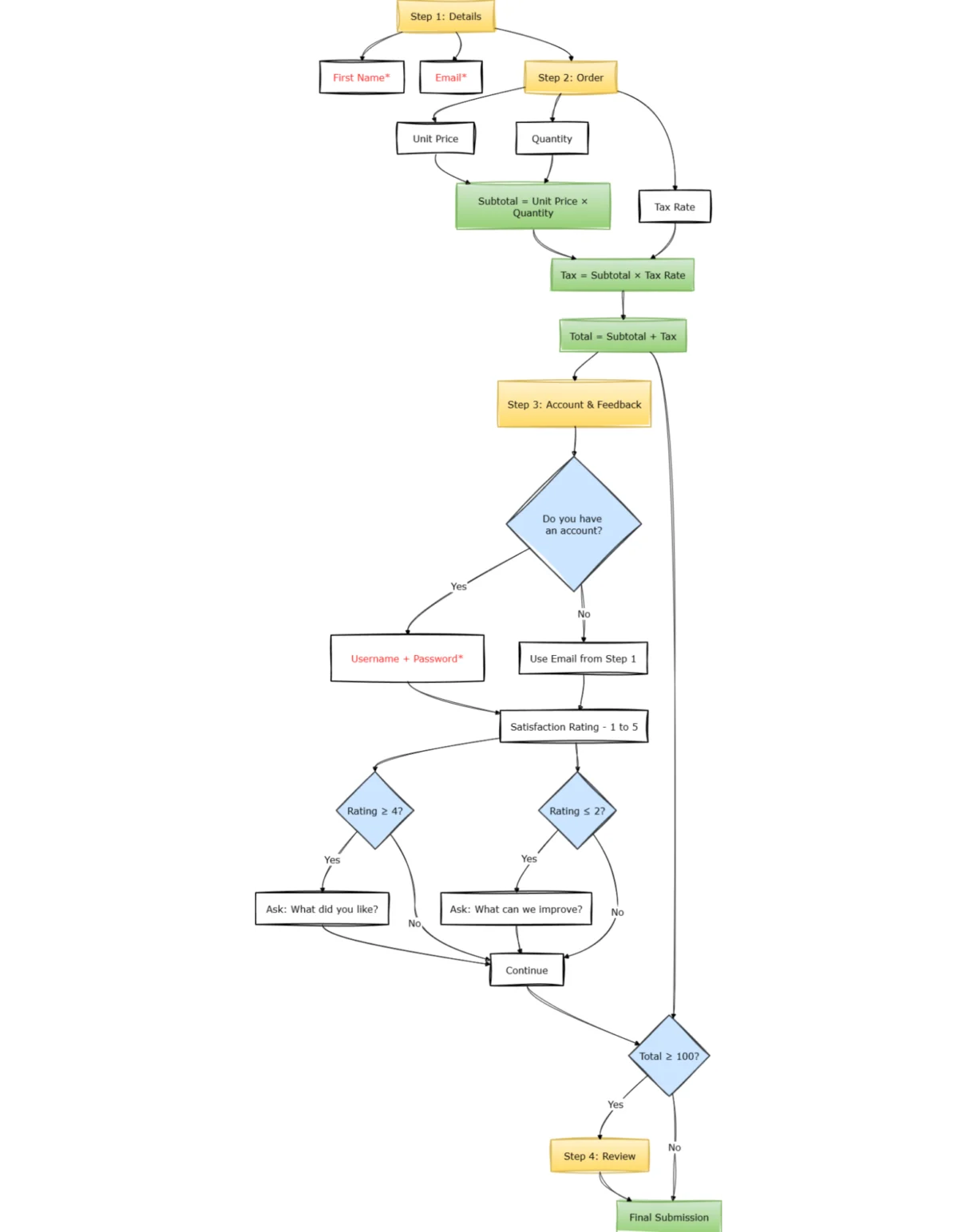
The architectural landscape of frontend development is currently witnessing a significant pivot in how complex user inputs are managed within the React ecosystem. For years, the prevailing mental model among software engineers has been that forms are inherently UI components, leading to a standardized stack comprising React Hook Form (RHF) for state management and Zod for schema validation. While this approach remains highly effective for standard data entry—such as login screens and basic configuration pages—industry experts are increasingly identifying a "complexity ceiling" where traditional component-driven forms transform into unwieldy rule engines. This shift necessitates a re-evaluation of form architecture, moving away from hard-coded JSX logic toward flexible, schema-driven systems like SurveyJS.
The Architectural Divide: UI vs. Rule Engines
At the heart of modern web application development lies the form, the primary bridge between user intent and backend data. In the early days of React, form management was often handled through controlled components, which frequently led to performance bottlenecks during frequent re-renders. The introduction of React Hook Form revolutionized this space by leveraging uncontrolled components and refs, significantly optimizing performance for large-scale applications.
However, as business requirements evolve, forms often outgrow their initial purpose as simple data collectors. They begin to accumulate "visibility rules"—logic that dictates whether a field appears based on previous answers—and "derived values" that calculate totals or subtotals in real-time. When a form reaches this level of complexity, it ceases to be a mere UI element and becomes a decision process. In a component-driven model, this logic is often scattered across useWatch hooks, useMemo calculations, and complex superRefine blocks within Zod schemas. The result is an application where business logic is inextricably leaked into the view layer, making the system difficult to inspect, test, and maintain.
Chronology of Form Complexity: From Simple Inputs to Dynamic Workflows
The transition from a manageable form to a problematic one typically follows a predictable timeline in the software development lifecycle. Understanding this chronology allows teams to identify the exact moment an architectural shift is required.
- The Initialization Phase: A project begins with standard CRUD (Create, Read, Update, Delete) requirements. Developers implement React Hook Form and Zod to handle basic validation. The code is clean, modular, and easy to follow.
- The Conditional Expansion: Product requirements introduce basic branching logic. For instance, a "Company Name" field only appears if the user selects "Business" as their account type. This is handled via simple inline JSX branching.
- The Calculation Layer: Requirements for real-time feedback emerge. Forms must now calculate taxes, discounts, or progress bars based on user input. Developers introduce
useWatchto monitor field changes anduseMemoto prevent redundant calculations. - The Cross-Field Validation Crisis: Validation rules become interdependent. The validity of "Field A" now depends on the value of "Field B" and "Field C." Developers reach for Zod’s
superRefineorrefinemethods, creating a centralized but increasingly opaque logic block. - The Multi-Step Navigation Leak: The form is broken into multiple pages. Navigation logic—determining which page comes next based on current data—starts to reside within the component’s state management, further blurring the line between UI and business logic.
- The Maintenance Wall: At this stage, any change to the form’s logic requires an engineer to navigate a complex web of hooks and conditional renders. A simple request from a product manager to change a threshold value requires a full deployment cycle, including code reviews and regression testing.
Data-Driven Insights: The Impact of Architectural Choices
Industry data suggests that technical debt related to frontend forms is a leading cause of slowed development velocity in enterprise applications. According to a 2023 survey of senior frontend architects, approximately 45% of maintenance time in complex dashboard applications is spent debugging or updating form-related logic.

Furthermore, bundle size analysis reveals a stark contrast between the two approaches. While the RHF + Zod stack is lightweight (approximately 15-20kB gzipped), the logic required to handle a 50-field dynamic form can add hundreds of lines of custom code. Conversely, schema-driven libraries like SurveyJS carry a larger initial footprint (roughly 100-150kB) but maintain a flat complexity curve. As the form grows, the React code remains static, while only the JSON schema—a non-executable data format—increases in size.
Technical Analysis: Component-Driven vs. Schema-Driven
To understand the practical implications of these two models, it is essential to analyze how they handle identical requirements for a multi-step order form.
The Component-Driven Model (RHF + Zod)
In the traditional React Hook Form approach, the developer is responsible for orchestrating the "glue" between the UI and the logic. The Zod schema defines the shape of the data, but it struggles with "conditional requirement" (e.g., making a password required only if a user wants to create an account). This logic must be moved into a superRefine block, which operates on the data after the initial parse.
In the UI layer, the developer must manually manage the step state, use hooks to watch specific values, and write conditional JSX to show or hide fields. While this offers maximum flexibility in styling, it creates a "black box" where the form’s behavior can only be understood by executing the code mentally.
The Schema-Driven Model (SurveyJS)
The alternative approach treats the form as a data structure rather than a component tree. Using SurveyJS, the entire form—including its pages, visibility rules, calculations, and validation—is defined in a single JSON object. This schema is then passed to a runtime engine that handles the rendering and state management automatically.
In this model, "visibility logic" is handled by a visibleIf property in the JSON, and calculations are handled by an expression engine. The React component itself becomes a "dumb" wrapper, responsible only for mounting the library and handling the final submission. This decoupling allows the form logic to be stored in a database or edited via a visual builder, effectively empowering non-technical stakeholders to make updates without developer intervention.

Industry Reactions and Professional Perspectives
The shift toward schema-driven forms has garnered significant attention from the developer community. "The problem with treating forms as pure UI is that we eventually run out of ways to compose them cleanly," says Marcus Thorne, a lead frontend architect at a prominent FinTech firm. "When you have a 10-page insurance application, you don’t want that logic in your React components. You want it in a format that can be versioned, audited, and potentially shared with the backend for server-side validation."
Conversely, proponents of the component-driven approach argue that for smaller applications, the overhead of a schema-driven engine is unnecessary. The consensus among experts suggests that the choice depends entirely on the "volatility" and "complexity" of the form’s rules. If the rules are static and simple, RHF + Zod is the gold standard. If the rules are complex and subject to frequent changes by business units, a schema-driven approach is superior.
Broader Implications for Development Teams
The adoption of schema-driven architectures has profound implications for team dynamics and operational efficiency. By moving form logic into JSON schemas, organizations can achieve:
- Improved Collaboration: Product managers and UX designers can use visual form builders to generate the JSON schema, reducing the "translation gap" between design and implementation.
- Faster Iteration: Changes to validation rules or field labels no longer require a code change or a redeploy. The application can fetch the latest schema from an API at runtime.
- Enhanced Auditability: For industries like healthcare or finance, having a declarative JSON schema makes it easier to provide regulators with a clear map of how data is collected and validated.
- Cross-Platform Consistency: A JSON-based form definition can, in theory, be used to render the same form on a web platform using React and a mobile platform using React Native, ensuring identical validation logic across all devices.
Conclusion: Strategic Decision-Making in Form Architecture
The evolution from component-driven to schema-driven forms represents a maturing of the React ecosystem. As web applications take on increasingly complex tasks once reserved for desktop software, the tools used to build them must evolve beyond simple UI abstractions.
For developers, the challenge lies in identifying the tipping point. A login form will likely always be a component. However, when a form begins to dictate the flow of the application based on user input, it has transitioned into a rule engine. Recognizing this distinction early in the development process allows teams to choose the right abstraction—ensuring that their code remains maintainable, their logic remains transparent, and their applications remain resilient to the ever-changing demands of business requirements. The future of React forms is not just about how they look, but about how clearly their underlying logic is defined and where that logic lives.

