
The global technology landscape is currently witnessing a critical pivot in how artificial intelligence is delivered to the end-user, moving away from the "tool-first" mentality toward a philosophy of seamless, invisible integration. For the past two years, the market has been flooded with standalone AI applications and "wrappers" that require users to navigate away from their primary workflows to engage with large language models. However, emerging data and user experience (UX) research suggest that the era of tool proliferation is reaching a saturation point. Instead of seeking more applications to manage, users are increasingly demanding that AI capabilities be embedded directly into their existing mental models and established digital environments. This shift, often described as the transition from "AI-First" to "Quiet AI," represents a fundamental change in product design, prioritizing the reduction of friction over the novelty of technology.
The Problem of Tool Fatigue and Context Switching
The modern digital worker is currently facing an unprecedented level of "app fatigue." According to recent industry reports, the average enterprise organization now utilizes over 130 different Software-as-a-Service (SaaS) applications. Research conducted by the Harvard Business Review suggests that the "cognitive tax" of switching between these applications is significant, with employees toggling between different apps and websites nearly 1,200 times a day. This constant context switching leads to a phenomenon known as "toggling tax," which can cost a company thousands of dollars per employee in lost productivity annually.
In this context, the introduction of standalone AI tools—while powerful—often exacerbates the problem. When a user must leave a spreadsheet to prompt a chatbot, then copy and paste the result back into their document, the efficiency gained by the AI is frequently offset by the friction of the transition. Design experts, including Vitaly Friedman of Smashing Magazine, argue that the most impactful AI features are those that address problems characterized by high severity, high frequency, and high levels of frustration without requiring the user to learn a new interface or command structure.
From AI-First to Quiet AI: A Strategic Evolution
The initial wave of generative AI was dominated by the "AI-First" philosophy. In this model, the interface is designed around the capabilities of the machine, often manifesting as a blank chat box or a terminal-like command line. While these interfaces offer maximum flexibility for power users, they frequently ignore decades of established design decisions that have shaped user expectations.
In contrast, the concept of "Quiet AI" is gaining traction among UX designers and product strategists. Quiet AI refers to intelligent features that remain invisible until they are needed, operating in the background to assist with repetitive or frustrating tasks. These integrations do not scream for attention; instead, they align with the user’s existing mental models.
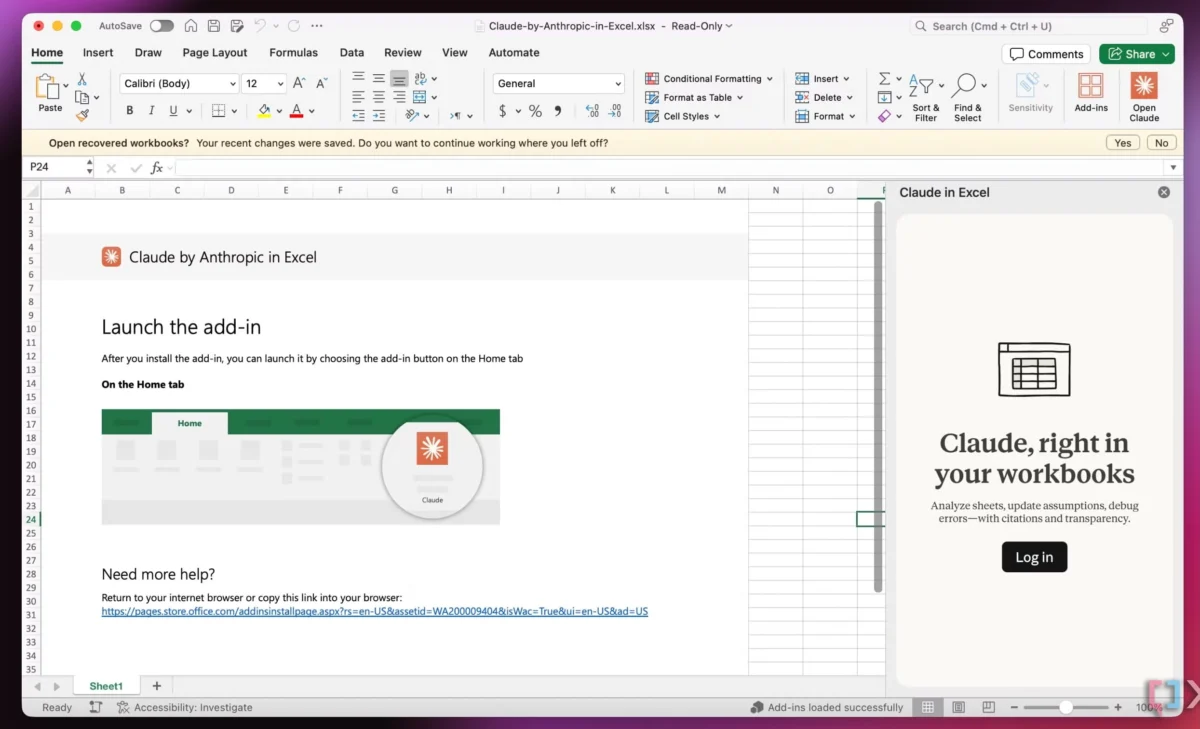
A prime example of this evolution is the integration of Anthropic’s Claude into the Microsoft Office suite. Rather than requiring users to open a separate browser tab, the AI is embedded within Excel, PowerPoint, and Word. This allows the system to study specific rows, columns, or paragraphs in context. By staying within the application, the AI respects the user’s current focus, reducing the cognitive load required to complete complex data analysis or content generation tasks.
Chronology of the Integration Trend
The move toward integrated AI has followed a distinct timeline over the last 24 months:
- Q4 2022 – Q1 2023: The Standalone Boom. Following the release of ChatGPT, thousands of "AI-first" startups launched, most offering niche web-based tools for specific tasks like copywriting or image generation.
- Q2 2023 – Q4 2023: The Sidebar Phase. Major platforms began introducing AI sidebars (e.g., Microsoft Copilot, Adobe Firefly). This kept the AI within the same window but still treated it as a separate "assistant" that required active management.
- Q1 2024 – Present: Contextual and System-Level Integration. The current phase focuses on "Quiet AI" and system-level actions. Features are no longer just "assistants" in a sidebar; they are integrated into the core functions of the operating system and existing software UI, such as folder structures and right-click menus.
Case Study: System-Level Folder Instructions
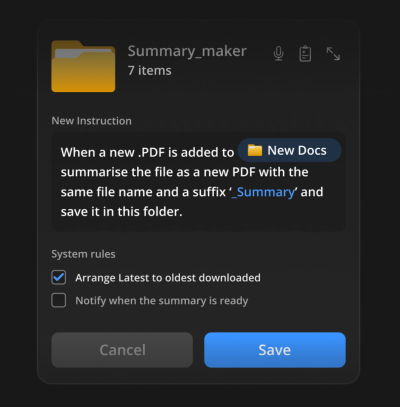
One of the most innovative concepts currently being explored in the design community is the implementation of "Folder Instructions" for system-level AI. Proposed by designers such as Karthikeya GS, this concept applies AI logic directly to the file management systems that users have used for decades.
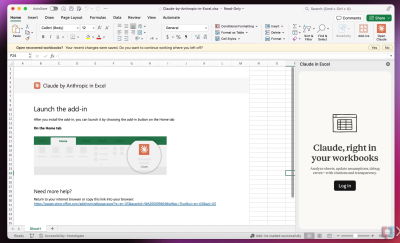
In this model, a user can assign specific "instructions" or "intents" to a digital folder. For example, a folder labeled "Passport Application" could be programmed with rules to automatically organize incoming documents, summarize PDF requirements, or alert the user if a specific form is missing. This approach leverages the established mental model of a "folder" as a container for related items but enhances it with autonomous capabilities.
The technical advantage of this system-level integration is the localization of permissions. Actions are scoped to the specific folder, ensuring that the AI only interacts with the data the user has explicitly provided. This addresses a major hurdle in AI adoption: the fear of over-reaching data access. By integrating AI at the folder level, developers can provide high-value automation—such as generating summaries on the fly—without forcing the user to navigate a complex new workflow.
Supporting Data: The Impact of Seamless Integration
Market analysis indicates that products prioritizing seamless integration see higher retention rates than those requiring standalone interaction. A 2023 study on workplace automation found that:

- Users are 40% more likely to adopt an AI feature if it is integrated into a tool they already use daily.
- The perceived "usefulness" of AI increases by 65% when the tool can access the user’s current context (the document or data they are currently viewing) without manual input.
- Error rates in data transfer decrease by 22% when AI outputs are generated directly within the target application, eliminating the need for manual copy-pasting.
These statistics underscore the reality that for most people, the "shiny new tool" is less valuable than a "smarter existing tool."
Industry Responses and Expert Analysis
The design community’s reaction to this shift has been largely positive, though it poses new challenges for developers. Vitaly Friedman, a leading voice in web design, has launched initiatives like "Design Patterns For AI Interfaces" to help designers move past the "chat box" paradigm. The consensus among experts is that the "Terminal" era of AI—where users type commands to get results—is a temporary bridge to a more intuitive future.
"Users don’t get excited about navigating terminal commands or jumping between endless back-and-forth chat interactions," Friedman notes in his analysis of current UX trends. "They need seamless integrations of useful features to address problems with high severity and high frequency."
Technologists suggest that the next frontier of this integration will be "Agentic UI." This involves interfaces that can predict the user’s next step based on their current folder activity or document content and offer to complete the task autonomously. However, for this to succeed, the AI must remain "quiet" and subservient to the user’s established habits.
Broader Implications for the Future of Software
The implications of this shift are profound for the software industry. If the value of AI lies in its integration rather than its standalone existence, the competitive advantage shifts toward established platform holders like Microsoft, Google, and Apple, who own the environments where work already happens.
For startups, the path forward likely involves building "headless" AI services that can be easily plugged into other ecosystems via APIs, rather than trying to build the "next big destination website." The success of a product will no longer be measured by how much time a user spends inside the app, but by how effectively the app saves the user time within their broader digital life.

Furthermore, this trend emphasizes the importance of "Jakob’s Law" in the age of AI. Jakob’s Law states that users spend most of their time on other sites, and they prefer your site to work the same way as all the other sites they know. By aligning AI with existing mental models—like folders, spreadsheets, and text documents—designers can bypass the steep learning curve usually associated with transformative technology.
Conclusion
As the initial hype surrounding generative AI matures into practical application, the focus of the tech industry is clearly shifting toward the "how" of delivery rather than just the "what" of capability. The move toward seamless integration and "Quiet AI" represents a maturation of the field. By reducing the burden of learning new tools and respecting the established workflows of the user, developers can deliver the true promise of artificial intelligence: a digital environment that assists rather than distracts, and one that simplifies rather than complicates the daily lives of its users. The future of AI is not a new destination; it is a smarter version of the places we already inhabit.

