
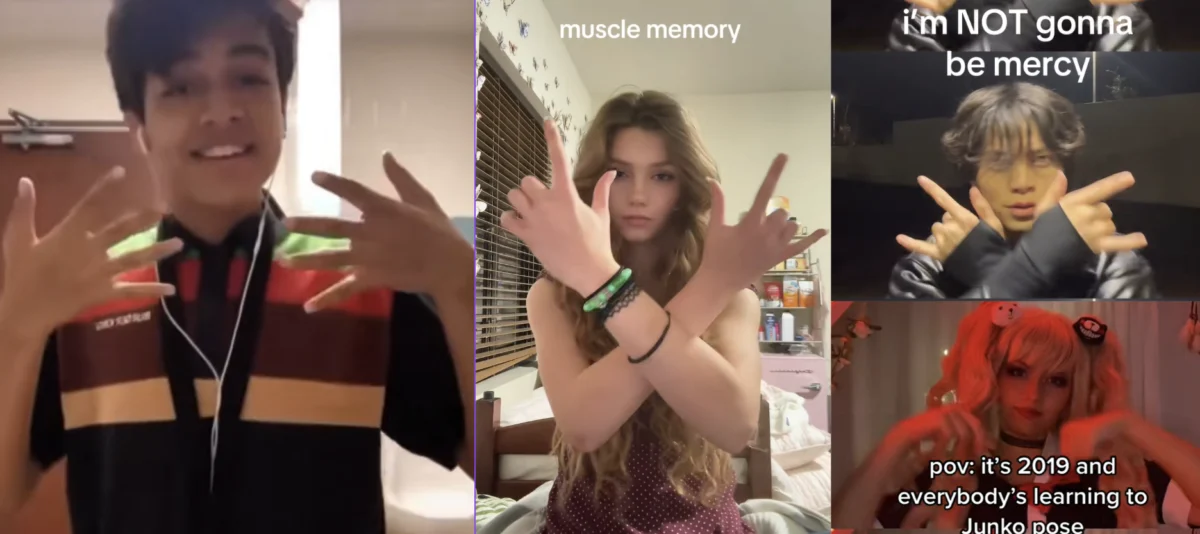
Junko Posing, frequently referred to in digital spaces as Junkoposing, represents a significant intersection between Japanese gaming subcultures and the rapid evolution of Western short-form video platforms. The trend, which involves the rhythmic recreation of dramatic, exaggerated poses by the character Junko Enoshima from the Danganronpa video game franchise, has transitioned from a niche hobby for cosplayers into a foundational element of TikTok’s early cultural identity. Characterized by staccato hand gestures, rapid-fire facial transitions, and a distinct visual "looping" quality, the movement has survived multiple cycles of internet popularity, evolving from a viral sensation to a victim of "cringe" culture, and finally into a nostalgic "lost art" during its resurgence in 2025 and 2026.
The Genesis of an Antagonist: Danganronpa and the Ultimate Fashionista
To understand the mechanics of the Junko Posing trend, one must first analyze its source material. The Danganronpa series, developed by Spike Chunsoft and first released in 2010 for the PlayStation Portable (PSP), introduced a unique visual style described as "2.5D motion comic." This aesthetic utilized flat, two-dimensional character sprites placed within three-dimensional environments. Because these sprites were static images, the developers used dramatic "pose switching" to convey emotion and personality shifts during the game’s high-stakes "Class Trials."
Junko Enoshima, the primary antagonist of the first title, Danganronpa: Trigger Happy Havoc, was designed to be the "Ultimate Fashionista." Her character design was intentionally flamboyant, featuring long blonde pigtails, bear-themed hair clips, and a high-contrast red, black, and white color palette. Crucially, the narrative reveals that Junko suffers from extreme boredom, leading her to adopt multiple conflicting personas—ranging from a sophisticated intellectual and a stoic realist to a hyper-energetic "cute" idol and a weeping, distressed victim. Each persona was accompanied by a specific, exaggerated sprite pose. It is this four-pose sequence of rapid personality shifts that provided the technical blueprint for what would eventually become a global TikTok trend.
The First Wave: 2018–2021 and the Rise of "Emote" Culture
The transition of Junko’s in-game movements to social media was facilitated by the rise of TikTok in the late 2010s. The platform’s algorithm favored high-energy, visually repetitive content that could be easily replicated by users. By 2019, the "Junko Pose" had become endemic within the anime and cosplay communities. Early adopters utilized the poses to demonstrate their ability to switch facial expressions in time with music, a skill that became a hallmark of "TikTok talent" during the app’s formative years.
Supporting data from this era highlights the trend’s massive reach. In April 2019, early compilations began appearing on YouTube, documenting thousands of users participating in the challenge. One notable video by YouTuber @aradiiiah served as a digital archive for these early performances, showcasing how the trend had moved beyond the Danganronpa fandom into the broader "e-girl" and "e-boy" aesthetics of the time.
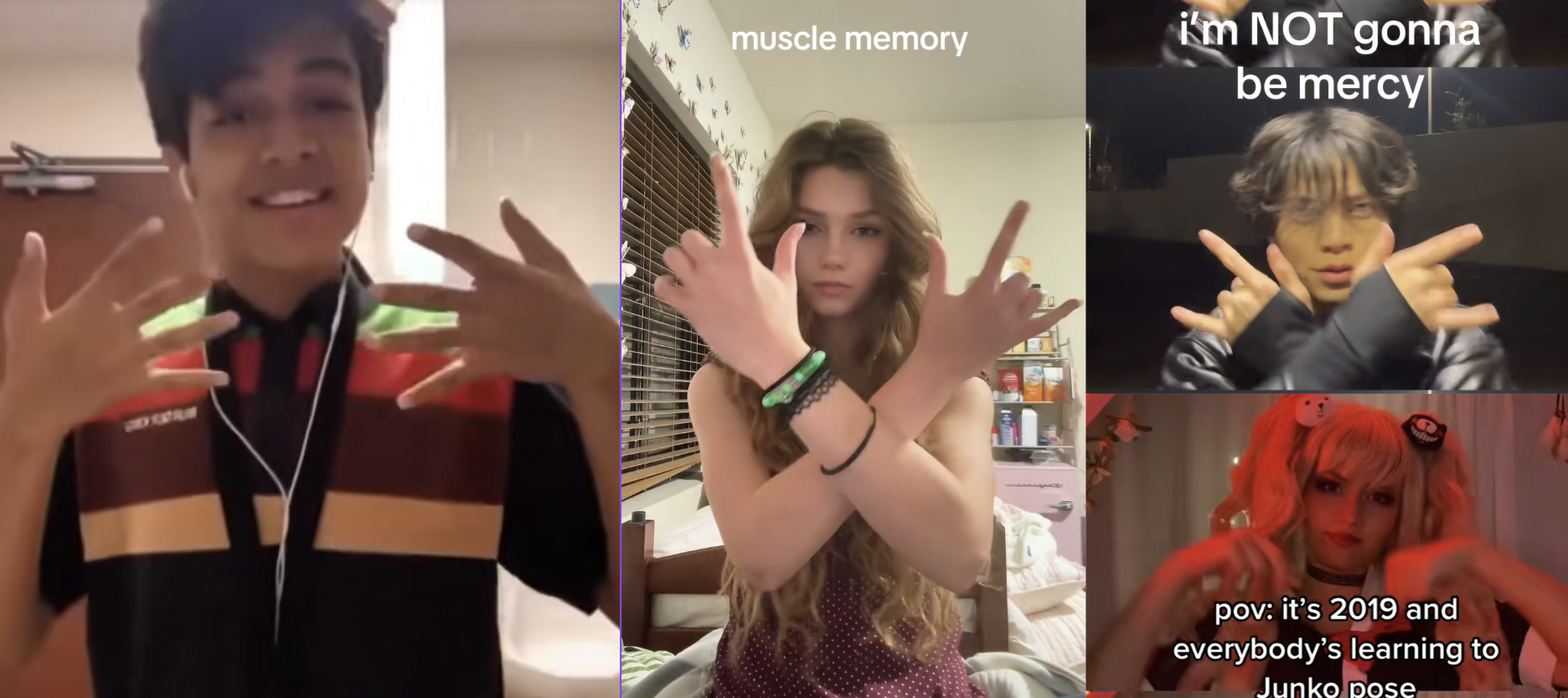
The trend’s virality was further cemented through cross-pollination with other internet memes. The "I’m Not Gonna Be Mercy" variation is a primary example of this phenomenon. Utilizing the song "No Mercy" by The Living Tombstone—originally a tribute to the game Overwatch—users synchronized Junko’s staccato movements to the lyrics. This created a meta-meme that combined three distinct fandoms: Danganronpa, Overwatch, and the broader TikTok dance community. A December 2020 upload by user @mercy.cosplay, which garnered over 750,000 views, exemplifies the peak of this era, where the "Junko Pose" was no longer just about the character, but about a specific style of digital performance.
The Burger King Incident and the Saturation of the Trend
As Junko Posing reached its saturation point, it began to leak into "normie" culture, often with surreal or humorous results. The most famous instance of this is the "Burger King Guy" video. Originally surfacing in 2019 and seeing numerous high-traffic reuploads through 2024 and 2026, the video depicts a Burger King employee performing the Junko poses in a restroom to the song "Join Us for a Bite" by JT Music.
This specific video served as a cultural bridge. It moved Junko Posing away from the polished world of high-end cosplay and into the realm of "shitposting" and ironic humor. The absurdity of a fast-food worker performing intricate anime-inspired gestures in a utilitarian setting resonated with the internet’s love for the incongruous. By 2024, reuploads of this video, such as one by user @jaykung1234876, achieved over 5.1 million views, while parodies of the video, such as those by @raviolzalez, exceeded 10 million views. This data suggests that while the original sincerity of the trend may have waned, its value as a comedic template remained high.
The "Cringe" Backlash and Cultural Gatekeeping
By late 2021 and 2022, Junko Posing faced a significant decline in popularity, largely due to the "cringe" label. In internet sociology, "cringe" is often weaponized against subcultures—particularly those dominated by younger, female, or neurodivergent participants—when their niche interests become too visible to the mainstream. Critics began to mock the "staccato" arm movements and the exaggerated "anime eyes" as being over-the-top or embarrassing.
This backlash led to a period of dormancy. For several years, performing a Junko Pose was seen as an outdated "2019 TikTok" behavior. However, this period of exile was essential for the trend’s eventual transformation. By being labeled "cringe," the movement was preserved in a digital amber, waiting for the cycle of nostalgia to turn.
The 2025–2026 Resurgence: Nostalgia as a Catalyst
In a display of the "20-year rule" of fashion being compressed into a five-year cycle by the internet, Junko Posing saw a massive resurgence in late 2025. This revival was driven by two distinct groups. The first consisted of "veteran" TikTok users who had participated in the trend during their teenage years. For these individuals, the poses were a form of "muscle memory," as noted by TikTok user @yuriprincess44 in a November 2025 video that reached 1 million views.
The second group consisted of newer users who viewed Junko Posing as a "lost art form" of the early TikTok era. This perspective was popularized by user @fishyuna in February 2026, whose video calling the poses an "art form" garnered 2 million views in a single month. This shift in perception—from "cringe" to "classic"—is a common trajectory for digital trends. What was once considered embarrassing becomes a badge of honor for those who remember the "old days" of the platform.
Technical Analysis: Why Junko Posing Works
From a technical standpoint, the success of Junko Posing can be attributed to several factors that align with the psychology of short-form video consumption:
- Visual Anchoring: The poses provide clear, high-contrast visual "hits" that correspond to the beat of a song. This makes the content satisfying to watch on a loop.
- Low Barrier to Entry, High Ceiling for Mastery: While anyone can attempt the poses, the "perfect" Junko Pose requires significant coordination, facial control, and timing. This encourages repeated attempts and high engagement.
- Persona Fluidity: The trend allows creators to showcase multiple "versions" of themselves in a 15-second window, tapping into the platform’s focus on identity and self-expression.
- Algorithmic Friendliness: The rapid movement and high-energy nature of the poses are designed to capture attention within the first three seconds of a "For You Page" (FYP) scroll, a metric that TikTok’s algorithm prioritizes.
Broader Impact and Digital Legacy
The legacy of Junko Posing extends beyond the Danganronpa fandom. It helped pioneer the "emote" style of TikTok content, where creators mimic the movements of video game characters or avatars. This has since evolved into other trends, such as the "NPC Streamer" phenomenon, where creators perform repetitive, programmed-looking actions for live audiences.
Furthermore, Junko Posing served as a major touchstone for how Japanese media is consumed and repurposed by Western audiences. It demonstrated that a character’s "vibe" and physical language can be stripped of their original narrative context and repurposed as a universal digital language. Junko Enoshima, originally a character in a dark murder mystery game, became—to millions of people—simply "the girl who does the poses."
Conclusion: The Future of the Trend
As of mid-2026, Junko Posing remains a resilient part of the digital landscape. While it may never again reach the monocultural heights of 2019, its transition into a nostalgic staple ensures its survival. The trend serves as a case study in the lifecycle of internet memes: from niche origin to viral explosion, through the valley of "cringe," and finally into the hallowed ground of digital nostalgia. As platforms continue to evolve, the "Junko Pose" stands as a reminder of the power of a single, well-designed character to influence the physical movements and creative output of an entire generation of digital creators.

