
The rapid integration of Large Language Models (LLMs) into the design process has introduced a significant paradox: while AI can generate user interfaces in seconds, the resulting prototypes often suffer from "design drift," characterized by inconsistent spacing, off-brand color choices, and technical debt. As organizations seek to leverage generative AI to accelerate product development, a new standard for design systems is emerging. This standard shifts the focus from human-centric visual libraries to machine-readable "infrastructure," ensuring that AI tools can interpret design intent with the same precision as a human developer.
The Evolution of Design Documentation in the AI Era
For the past decade, design systems have been optimized for human consumption. Tools like Figma, Sketch, and Adobe XD allowed designers to create visual components that developers would then translate into code. However, the rise of AI-driven prototyping—where a prompt or a wireframe is converted into a functional interface—has revealed the limitations of these traditional systems. When an AI "looks" at a design file, it often lacks the context of why certain decisions were made, leading to the hallucination of values or the misuse of components.
Industry experts, including Hardik Pandya of Atlassian and Vitaly Friedman of Smashing Magazine, have identified that the primary cause of poor AI output is not the capability of the LLM itself, but the "noise" within the design system. Tiny inconsistencies, such as hard-coded hex values instead of design tokens, or undocumented edge cases in a component’s behavior, act as hurdles for the AI. To solve this, the industry is moving toward "LLM-ready" design systems that treat design decisions as fundamental infrastructure rather than merely aesthetic choices.
Design Decisions as Infrastructure: A Shift in Methodology
The core philosophy of an AI-ready design system is the transformation of design decisions into a structured data format. Traditionally, a designer might decide that a primary button should have an 8px border radius because it "feels right" for the brand. In an AI-enabled workflow, this decision must be documented in a way that an LLM can reference as an absolute rule.
Treating design as infrastructure means that every decision—ranging from accessibility standards to the prioritization of user tasks—must be codified. This documentation, often stored in Markdown or JSON files, acts as a "source of truth" that the AI consumes before generating any code. This prevents the AI from making assumptions. For instance, instead of the AI guessing which button to use for a "Delete" action, the infrastructure-level documentation specifies that destructive actions must always use the "Critical/Danger" variant of the button component, accompanied by a confirmation modal.
The Three-Layer Framework for AI Alignment
To achieve consistency in AI-generated prototypes, technical leads are advocating for a three-layer approach that bridges the gap between visual design and machine logic.
1. The Specification Layer (Markdown Spec Files)
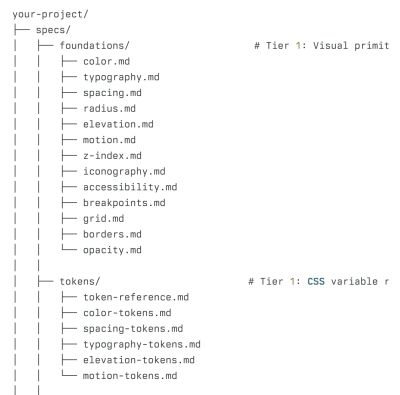
The first layer consists of structured text files, typically in Markdown format. Unlike a visual Figma file, which requires complex vision-language models to interpret, Markdown is natively understood by all LLMs. These spec files include:

- Design Principles: High-level goals such as "Mobile-first," "Accessibility-compliant (WCAG 2.1 AA)," and "Minimalist."
- Component Usage Guidelines: Specific "Do’s and Don’ts" for every UI element.
- Logic and Flow: Descriptions of how the interface should respond to various user inputs.
By providing these specifications as text, organizations reduce the computational cost of AI generation while significantly increasing accuracy. The AI no longer needs to decode patterns from mock-ups; it simply follows the written instructions provided in the spec file.
2. The Token Layer (Standardized Variables)
The second layer is the tokenization of all design attributes. Design tokens are the smallest atoms of a design system, representing values for colors, typography, spacing, and elevation. In an AI-ready system, the AI is restricted to a closed set of these named variables.
When an AI is prompted to "create a login screen," it should not have the liberty to choose a shade of blue. Instead, it must pull from the token layer (e.g., color.brand.primary.600). This ensures that even if the AI generates a new layout, the fundamental DNA of the brand remains intact. This layer eliminates "magic numbers" and hard-coded values that often lead to technical debt during the handoff from design to engineering.
3. The Auditing Layer (Automated Quality Control)
The final layer involves automated scripts and plugins that verify the AI’s output. Tools such as FigmaLint have become essential in this phase. FigmaLint is a free plugin designed to audit design files for inconsistencies, such as detached component instances, missing interactive states, or tokens that haven’t been properly bound.

In an AI-integrated workflow, an auditing script can scan a generated prototype and flag every instance where the AI deviated from the design system. This creates a feedback loop: the audit flags an error, and the AI uses that feedback to refine the prototype. This "self-correcting" mechanism is vital for maintaining high-quality outputs at scale, especially when working with third-party vendors or external component libraries.
Context Engineering: The Five Levels of Guidance
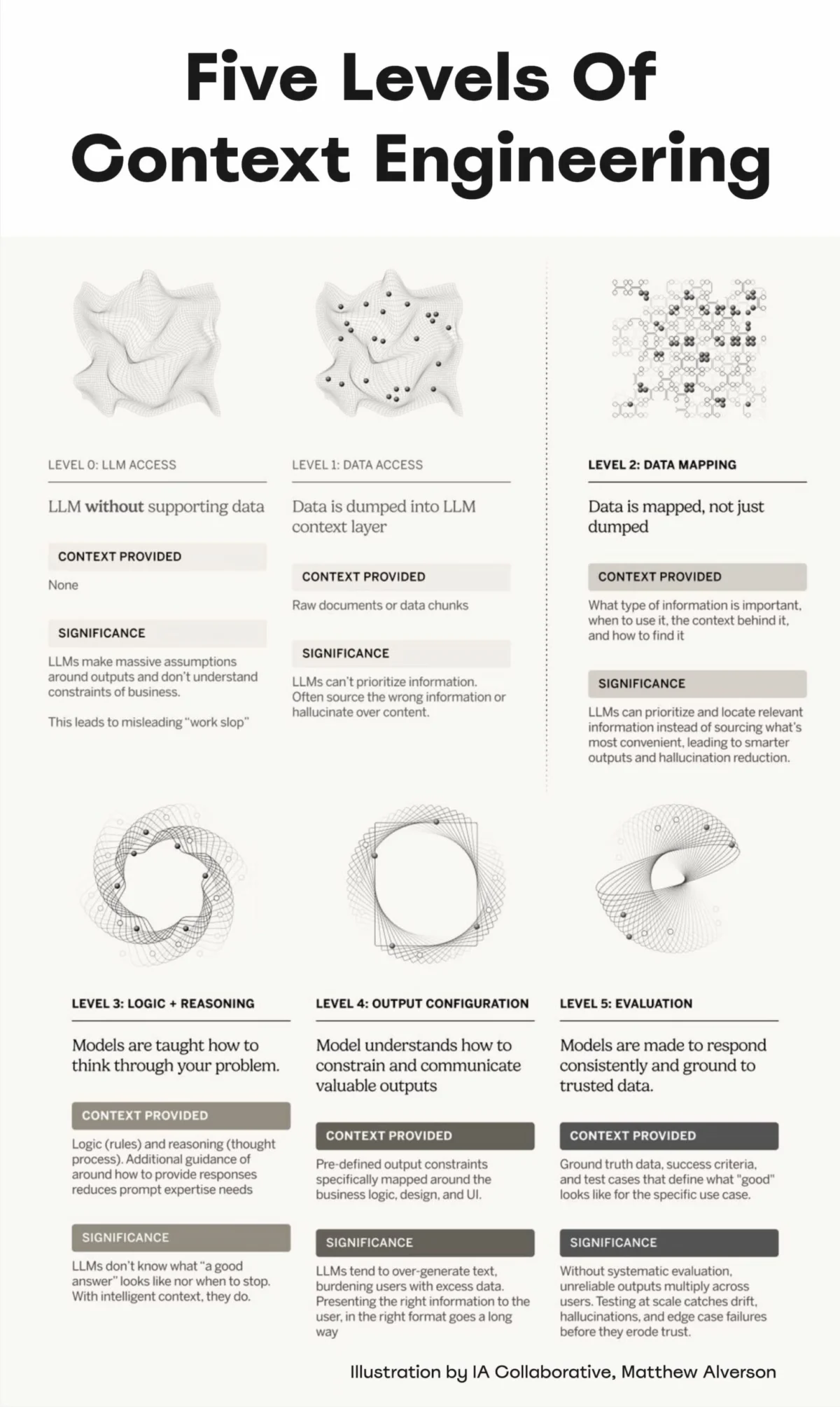
The effectiveness of AI in design is heavily dependent on "Context Engineering." Based on frameworks discussed by experts like Addy Osmani and Matthew Alverson, there are five levels of context that designers must provide to an AI to ensure a successful outcome:
- Level 0 (Zero Context): The AI relies on its general training data. This results in generic, "Uncanny Valley" designs that lack brand identity.
- Level 1 (Prompt Engineering): The designer provides specific instructions within the chat interface. This is better but difficult to replicate across a team.
- Level 2 (Reference Materials): The designer uploads specific spec files or screenshots. The AI begins to understand the specific "flavor" of the design system.
- Level 3 (RAG – Retrieval-Augmented Generation): The AI is connected to a live database of the design system. It can "look up" the latest components and tokens in real-time.
- Level 4 (Fine-tuning/Integrated Workflow): The AI is fully integrated into the design environment (e.g., a custom Figma plugin), with access to the entire history of the organization’s design decisions and user research.
As organizations move toward Level 3 and Level 4, the role of the designer shifts from "pixel pusher" to "context architect." The designer’s value is found in their ability to define the rules and constraints within which the AI operates.
Implications for Technical and Design Debt
One of the most significant benefits of an AI-ready design system is the reduction of design debt. Design debt occurs when temporary fixes or inconsistent elements accumulate over time, making the system harder to maintain. AI, when left unguided, tends to accelerate the creation of design debt by introducing "almost-right" components that don’t quite match the system.
However, by implementing a rigorous "infrastructure-first" approach, companies can use AI to clean up debt. An AI trained on a clean, LLM-ready design system can be tasked with auditing legacy files and automatically replacing hard-coded values with the correct tokens. This represents a shift from AI as a source of chaos to AI as a tool for systemic maintenance.
Broader Industry Impact and the Future of UI/UX
The move toward AI-ready design systems is not just a technical trend; it is an economic necessity. As companies look to reduce "Time to Market," the ability to generate high-fidelity, code-ready prototypes in minutes provides a massive competitive advantage.
Furthermore, this shift is forcing a reconciliation between design and engineering. For years, the "handoff" has been a point of friction. By documenting design as machine-readable infrastructure, the handoff becomes seamless. The same Markdown files and JSON tokens used by the AI to generate a prototype are the same files used by developers to build the final product.
The education of designers is also evolving. New resources, such as Vitaly Friedman’s "Design Patterns For AI Interfaces," are teaching designers how to build these systemic frameworks. The focus is moving away from visual aesthetics alone and toward the logic of interaction and the architecture of information.

Conclusion: The Human Element in a Machine-Readable World
While the technical requirements for AI-ready design systems are rigorous, the ultimate goal remains human-centric. By automating the repetitive aspects of design—such as state management, token application, and basic layout—designers are freed to focus on higher-level problems: user empathy, ethical AI implementation, and complex problem-solving.
The transition to AI-ready systems will likely take years of diligent work, as organizations must audit and refactor their existing libraries. However, the result will be a more robust, scalable, and intelligent design ecosystem. As the industry moves forward, the most successful designers will be those who can speak the language of both humans and machines, ensuring that as our tools become more powerful, our designs remain more consistent, accessible, and meaningful.

