

The field of user experience (UX) research is undergoing a significant shift as digital accessibility moves from a niche compliance requirement to a core component of product strategy. In a comprehensive exploratory study conducted throughout 2024 and early 2025, researchers have identified a critical "efficiency multiplier" in inclusive design: participants with cognitive disabilities identify nearly twice as many usability issues and suggestions as the general population. This finding, emerging from a joint study between accessibility platform Fable and the University of California, Irvine, suggests that prioritizing cognitive accessibility may be the most effective way to uncover universal design flaws that affect all users.
The Growing Prevalance of Cognitive Disability
Cognitive disability serves as an umbrella term for a wide range of conditions that impact how individuals process, store, and retrieve information. These conditions typically affect memory, focus, and learning capabilities. According to data from the Centers for Disease Control and Prevention (CDC), cognitive disability is the most prevalent form of disability in the United States, affecting approximately 13.9% of the adult population. Furthermore, a 2025 study from Yale University indicates that the number of U.S. adults reporting cognitive challenges is increasing rapidly, driven by factors ranging from long-term health trends to an aging demographic.
The category includes neurodivergent individuals—those whose brains process information and learn differently. This includes people with ADHD, Autism, and learning disabilities such as Dyslexia. As digital interfaces become more complex and saturated with information, the "cognitive load" required to navigate them has increased, making the insights of this demographic more relevant than ever to mainstream UX design.
Chronology of the Research Initiative
The initiative began in the summer of 2024 when an expert working group was formed to establish best practices for performing accessibility testing with people who have cognitive disabilities. Led by the leadership at Fable, the group sought to move beyond theoretical guidelines and create a practical framework for researchers.
The project followed a structured four-phase timeline:
- Framework Development (Summer 2024): The working group established four primary goals focused on recruitment, methodology, and the quantification of tester experiences.
- Screening and Best Practice Review (Fall 2024): The team developed a specialized screener for participants self-identifying with challenges in memory, focus, and learning. Simultaneously, they conducted an extensive review of existing academic and industry literature to synthesize established best practices.
- The Pilot Study (Late 2024): A pilot group of 25 testers was used to fine-tune the interview approach. This phase resulted in the creation of a formal guide for running user interviews and a survey designed to quantify cognitive user experiences.
- The Comparative Study (Early 2025): In collaboration with researchers from UC Irvine, including Syed Fatiul Huq, Pranav Pidathala, Ali Brown, and Michael Fagan, the team launched a formal study to compare insights from cognitive testers against a "general population" (gen pop) control group.
Methodology and Study Design
To ensure the study’s findings were not limited to a single type of digital environment, the researchers utilized an AI prototyping tool to generate three distinct websites, each with different aesthetic styles, content types, and functional goals.
Test Environment 1: Strong Snacks
Designed with a "brutalist" and bright aesthetic, this site focused on simple, three-ingredient recipes. The key functionality involved filtering by category (e.g., vegan, muscle building) and newsletter subscriptions. The tasks were designed to be straightforward, testing basic navigation and information retrieval.
Test Environment 2: Turning Pages
This was a complex bookstore website featuring a moody, classic design. It included advanced functionality such as a "book swiping" feature for profile building, custom book lists, and a full checkout flow. Tasks included using the book-matching feature and managing a shopping cart.
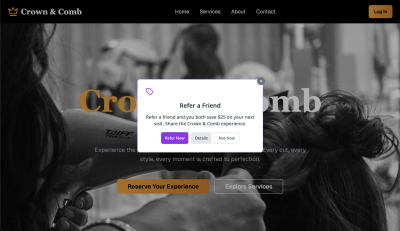
Test Environment 3: Crown & Comb
A high-end hair salon website characterized by a bold, black-and-white design. This site was intentionally designed to be complex, featuring a VIP program and various special service packages. One task—finding a specific bridal package—was engineered to be extremely difficult to test the limits of user persistence and clarity.

The study involved 30 facilitated online user interviews. Each website was tested by 10 participants, split evenly between those with cognitive disabilities and those from the general population. At the conclusion of each session, participants completed the Accessible Usability Scale (AUS), a 10-question survey used to evaluate the usability of digital products.
Quantitative Findings: The 1.8x Multiplier
The data analysis revealed a stark contrast in the volume of insights generated by the two groups. Across all three websites, participants with cognitive accessibility needs identified 197 usability issues, compared to 113 identified by the general population. Similarly, the cognitive group offered 93 suggestions for improvement, while the control group offered 54.
On average, cognitive participants identified 1.8 times more issues and provided 1.8 times more suggestions than their counterparts. This ratio held remarkably consistent across different levels of site complexity.
Performance by Site Complexity
The "Strong Snacks" site, being the simplest, had the highest median AUS scores. However, even here, cognitive participants identified 3.4 more issues on average than the gen pop group. Their AUS scores were 13.7 points lower, reflecting a more critical assessment of even "simple" designs.
The "Turning Pages" site, which had the most varied functionality, saw the cognitive group identifying an average of 17 issues per person, compared to 11 for the gen pop group. Interestingly, the cognitive group’s average AUS score was 60.8, significantly lower than the 78.0 recorded by the control group, suggesting that interaction challenges (like the checkout flow) have a disproportionate impact on users with cognitive needs.

The "Crown & Comb" site produced an unexpected result. While cognitive participants found 7 more issues on average, their median AUS score (68.0) was actually higher than the gen pop group (35.0). Researchers hypothesize that while the cognitive group was more adept at identifying specific visual and content flaws, the gen pop group was more easily frustrated by the intentional difficulty of the tasks, leading to lower overall satisfaction scores despite identifying fewer specific issues.
Qualitative Analysis and Issue Categorization
When the researchers categorized the issues, distinct patterns emerged. Cognitive participants were significantly more likely to flag issues related to:
- Content and Clarity: Ambiguous language or dense text blocks that hindered information processing.
- Affordance and Function: Confusion over whether an element was a button or a link, and what its specific function would be.
- Visual and Media Elements: Distractions caused by animations or icons that did not clearly represent their intended meaning.
In contrast, both groups identified navigation issues at almost identical rates (45 vs 46). This suggests that while basic navigation is a universal concern, cognitive participants act as "canaries in the coal mine" for more subtle issues of cognitive load and visual clarity.
One of the most profound findings was the difference in the psychological impact of poor design. In qualitative interviews, gen pop participants described difficult tasks as "frustrating" or "not engaging." However, cognitive participants used language related to well-being, describing the experience as feeling "drained" and "less able to focus." This indicates that for users with cognitive disabilities, poor UX is not just an inconvenience—it is a barrier that consumes limited mental energy.
Broader Impact and Business Implications
The results of this study have significant implications for corporate UX departments and product owners. By including cognitive participants early in the research cycle, teams can identify "high-load" issues that might otherwise remain hidden until a product is launched to a mass audience.
Efficiency in Research
Industry experts have noted that small sample sizes of cognitive users can yield outsized results. As one UX Manager at Bell Media observed, "Two sessions with cognitive users feel like 200 because of the volume of insights we get." This efficiency allows teams to identify more bugs and friction points with fewer participants, potentially reducing the overall cost of the research phase.
Risk Mitigation and Revenue
For e-commerce platforms like the "Turning Pages" prototype, clarity in the checkout flow is directly tied to conversion rates. Cognitive participants highlighted that inconsistent interaction patterns decreased their trust in the site. In a real-world scenario, this lack of predictability leads to abandoned carts. By solving for the user who requires the most clarity, businesses create a smoother, high-trust experience for everyone, thereby protecting revenue.
The Aging Demographic
The necessity of cognitive inclusion is further underscored by demographic shifts. U.S. Census Bureau projections indicate that the percentage of Americans aged 65 and older will increase from 17% to 25% by 2060. As 1 in 4 Americans becomes an older adult, cognitive decline will become a mainstream user experience challenge. Companies that fail to adapt their research methodologies to include cognitive accessibility today will find themselves ill-equipped to serve the primary consumer base of the near future.
Conclusion: Cognitive Inclusion as a Strategic On-Ramp
The study concludes that cognitive accessibility is a powerful "on-ramp" for broader inclusive research. While many teams find it daunting to begin testing with complex assistive technologies like screen readers or alternative navigation devices, cognitive research focuses on universal principles of clarity, predictability, and reduced mental load.
By addressing the needs of the 13.9% of the population with cognitive disabilities, UX teams naturally adopt design best practices that benefit all users, including those experiencing temporary impairment (such as stress or fatigue) and the rapidly growing elderly population. The evidence from Fable and UC Irvine suggests that cognitive inclusion is no longer an optional "extra" for accessibility teams, but a fundamental requirement for any organization seeking to build efficient, high-quality digital products for a diverse and aging world.

