
In the increasingly volatile digital economy of the late 2020s, the distinction between aesthetic design and core business strategy has effectively dissolved. Industry analysts and veteran user experience (UX) architects now identify interface friction not merely as a technical inconvenience but as a quantifiable financial drain. Recent data indicates that for modern enterprises, a friction-heavy interface can result in millions of dollars in wasted engineering expenditure and lost market value. As digital products evolve, business leaders have transitioned from viewing design as a cosmetic preference to recognizing it as the primary engine of corporate survival and long-term growth.
The current landscape of digital commerce is governed by the "economy of seconds," where every additional moment of user hesitation translates directly into a measurable business cost. UX research has moved beyond subjective "look and feel" assessments, rooting itself in rigorous data and behavioral analytics. This shift provides a bridge between creative departments and corporate boardrooms, establishing UX as a non-negotiable requirement for a healthy bottom line. Despite this, experts suggest that UX remains frequently undervalued as a purely visual role in many executive circles—a myth that is increasingly being dismantled by clinical, data-backed pillars of financial growth.
The Chronology of Design Integration in Business
The integration of UX into the corporate strategy framework has followed a distinct timeline over the past two decades. In the early 2010s, the "Mobile-First" era forced companies to prioritize essential functionality over cluttered desktop layouts. By 2018, the rise of "Design Thinking" began to permeate the C-suite, though often as a theoretical exercise rather than a data-driven mandate.

The pivotal shift occurred between 2022 and 2025, as global markets became saturated and customer acquisition costs (CAC) skyrocketed. During this period, the focus shifted from simple acquisition to retention and optimization. By mid-2025, benchmarks such as Largest Contentful Paint (LCP) became standard financial KPIs. Today, in 2026, the maturity of a firm’s UX practice is considered a leading indicator of its stock performance, with design-centric companies consistently outperforming the S&P 500.
The Economics of Prevention: The 1:100 Rule
One of the most compelling financial arguments for robust UX investment is the "1:100 rule." Historical studies from the IBM Systems Sciences Institute and more recent data from Sugue Technologies confirm a stark reality: fixing a software error after a product has been launched can be up to 100 times more expensive than addressing the issue during the initial design and prototyping phase.
From a journalistic perspective, this represents a form of "engineering insurance." When a navigation flaw or a logic error is discovered post-launch, the company incurs costs across three distinct tiers: technical debt, lost developer productivity, and the immediate revenue loss resulting from user abandonment. By validating every interaction before a single line of code is written, organizations drastically reduce their "failure demand"—the cost of fixing things that should have worked correctly the first time.
Performance as the Foundation of Revenue
Performance metrics have emerged as the uncompromising baseline of the modern user experience. A visually stunning interface is rendered worthless if the user bounces before the page fully loads. Industry statistics show that 47% of users expect a page to load in two seconds or less. Missing this window is often described by analysts as a "financial catastrophe."

Supporting data highlights the volatility of this metric:
- A one-second delay can reduce total conversions by 20% and customer satisfaction by 16%.
- Retail businesses collectively lose an estimated $2.6 billion annually due to slow load times.
- When mobile load times increase from one to three seconds, the bounce rate spikes by 32%.
- By the third second of delay, conversion rates typically plummet from an average of 40% to 29%.
Conversely, microscopic improvements yield massive levers for growth. Evidence suggests that a 0.1-second improvement in site speed can lift retail conversions by 8.4% and travel site conversions by 10.1%. As of June 2025, approximately 67% of high-performing websites reached the benchmark of a 31% improvement in LCP, which directly correlated to an 8% increase in total sales.
The Psychology of First Impressions and Decision Fatigue
The human brain processes visual appeal with startling speed. Research into human automaticity indicates that users form a definitive opinion about a website’s visual appeal in approximately 50 milliseconds (0.05 seconds). This visceral "gut feeling" is a survival mechanism that dictates whether a user will stay to explore a value proposition or exit immediately.
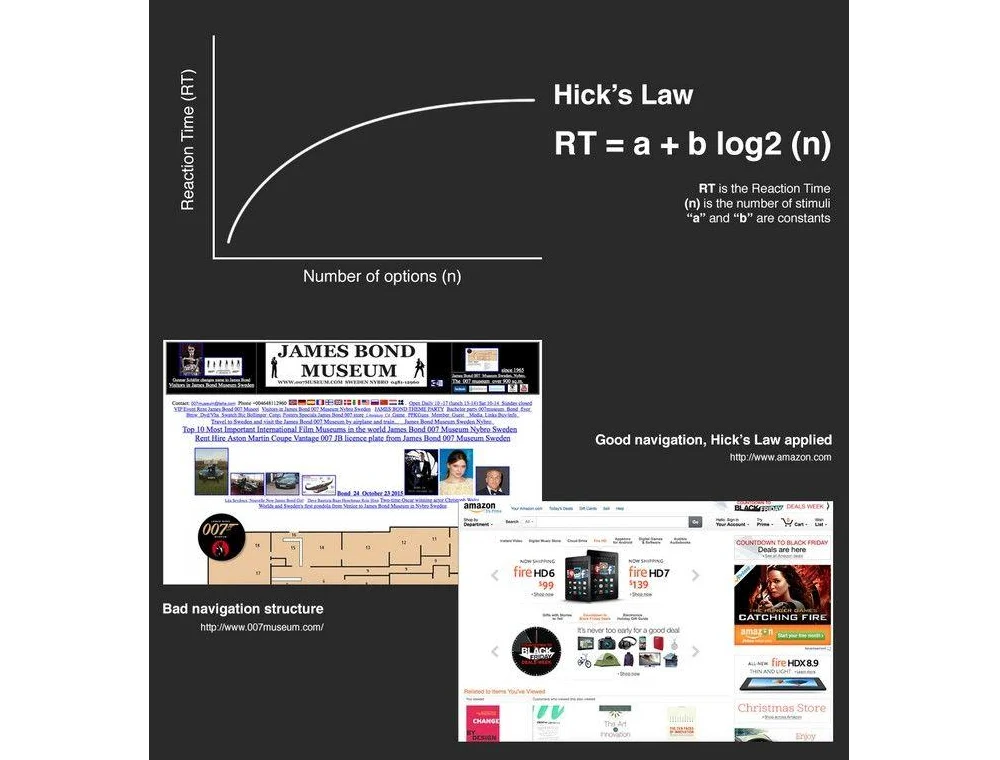
In the current market, 94% of first impressions are strictly design-related. If an interface feels dated or disorganized, users subconsciously project that lack of quality onto the entire product or service. This psychological reality is compounded by Hick’s Law, which states that the time required to make a decision increases logarithmically with the number of options available.

Stakeholders often operate under the misconception that more features equate to more value. However, psychology proves that every extra menu item or form field acts as a "cognitive tax." Top-performing digital platforms now achieve conversion rates exceeding 11% by applying radical simplification strategies, whereas average performers struggle below 3% due to "choice paralysis."
Cognitive Load and Content Comprehension
The strategic use of "white space" is often criticized by non-designers as wasted real estate, yet it remains a critical tool for user focus. Data shows that the proper use of negative space can increase a user’s content comprehension by up to 20%. By preventing cognitive load from peaking, designers guide users toward primary calls to action (CTAs), such as "Buy" or "Sign Up" buttons.
In 2026, as human attention spans have dropped to an average of eight seconds, simplicity has become the ultimate luxury. This is further supported by typography data. Optimal line spacing (generally 1.5 times the font size) and appropriate paragraph widths can increase reading speed and comprehension by another 20%. Legibility, therefore, is not a stylistic choice but a conversion tool; if a product’s value proposition is difficult to read, it is inherently difficult to sell.
Behavioral Engineering: The Goal Gradient Effect
One of the most effective psychological "hacks" in modern UX is the Goal Gradient Effect. This principle suggests that users are more likely to complete a task if they believe they have already made progress. A classic behavioral study found that a 10-stamp coffee loyalty card with two "pre-filled" stamps was completed significantly faster than an 8-stamp card with no pre-fills, despite the required effort being identical.

In the digital realm, showing an onboarding progress bar that begins at 15% (for the simple act of account creation) increases completion rates by over 40%. This strategy manages the user’s dopamine levels and creates a sense of momentum that carries them through complex workflows.
The Efficiency of the "Magic Five" in User Testing
Large-scale usability studies are frequently criticized for their inefficiency. While some firms spend six-figure budgets on studies involving hundreds of participants, the Nielsen Norman Group and other research bodies have proven that testing with just five users typically uncovers 85% of all usability problems.
This represents a mathematical sweet spot of diminishing returns. Beyond the fifth user, the cost of discovery rises while the number of new insights falls. Competitive organizations have adopted a "test, iterate, repeat" model, using small cohorts of five people to build bulletproof products at a fraction of the cost of traditional market research.
Broad Impact and the 9,900% ROI
The cumulative financial impact of these UX principles is staggering. On average, every $1 invested in UX returns $100—a 9,900% ROI. This return is the sum of increased conversion rates (which can improve by up to 400% with a fully optimized design) and drastically reduced customer support requirements. When a product is intuitive, the need for costly call centers and support tickets diminishes proportionally.

Furthermore, a McKinsey & Company report on the business value of design found that companies with high design maturity see 32% higher revenue growth and 56% higher total returns to shareholders compared to their peers. Despite this, an "experience gap" persists: while 80% of companies believe they deliver a "superior experience," only 8% of their customers agree. This disconnect represents a significant market opportunity for firms willing to prioritize data over intuition.
The Role of Artificial Intelligence in Modern UX
As AI continues to integrate into the tech stack, it has not replaced the fundamental rules of UX but has instead accelerated their implementation. AI-driven personalization allows for "hyper-Hick’s Law" applications, where interfaces dynamically hide irrelevant options for specific users. Predictive loading and AI-optimized image compression are also pushing page speeds toward the "instantaneous" threshold.
However, analysts warn that AI cannot override basic human psychology. The 50-millisecond judgment and the need for cognitive rest (white space) remain hardwired into the human biological experience. AI is currently viewed as a tool to automate the "tedious" aspects of design, allowing architects to focus on the high-level behavioral engineering that drives revenue.
Analysis of Implications
The data presented suggests that the digital marketplace has reached a stage of "UX Darwinism." Companies that fail to recognize design as a core financial pillar are not just losing "clicks"; they are losing their viability in a saturated market. The transition from subjective design to objective, data-backed UX is no longer a trend but a fundamental shift in how global business is conducted.

For the modern CEO, the takeaway is clear: UX design is no longer a department hired to "make things look nice." It is a research-driven, data-backed discipline that ensures a digital product serves as a revenue-generating machine rather than a cost center. As the decade progresses, the gap between design-led organizations and their competitors will likely continue to widen, leaving little room for those who rely on intuition over evidence.

