
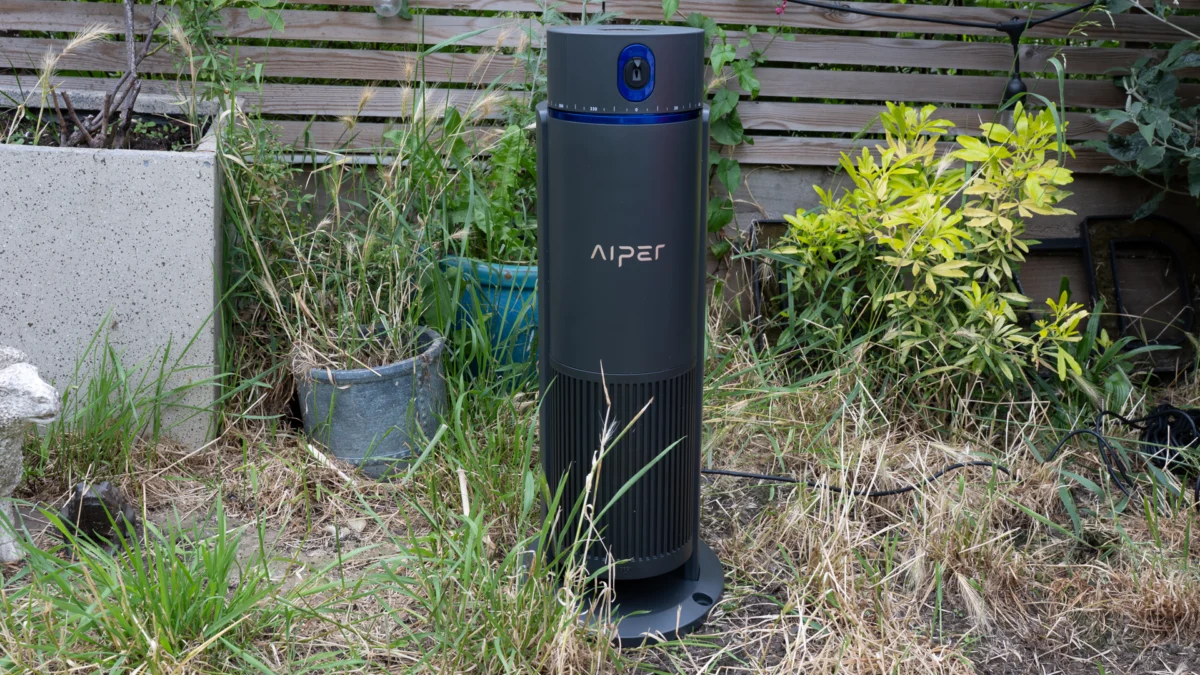
Keeping a garden vibrant and healthy, especially during the parched summer months, has historically presented a dichotomy: the tedious chore of manual watering with a hose or the indiscriminate deluge of a traditional sprinkler that often drenches areas less in need. The Aiper Irrisense 2 emerges as a sophisticated technological solution, aiming to transcend these limitations by introducing intelligent, precision watering to the domestic garden. This innovative device employs a unique mapping system, allowing it to precisely water lawns, meticulously follow the contours of flowerbeds, or deliver targeted hydration to individual, thirsty plants. While its performance is lauded for its accuracy and comprehensive coverage, this advanced functionality comes at a significant cost, both in terms of price and installation requirements. The Irrisense 2 is a substantial investment, demanding access to both a water source and a power supply, which can complicate discreet integration into existing garden aesthetics. Nevertheless, for those willing to find an appropriate placement, it represents one of the most intelligent and adaptable methods for maintaining a garden’s hydration needs.
The Evolution of Garden Watering: From Hose to High-Tech
For decades, homeowners have relied on basic gardening tools to maintain their green spaces. The garden hose, a direct extension of the municipal water supply, offers granular control but requires constant human intervention. This often leads to hours spent in the sun, a sacrifice many are unwilling to make. The oscillating or rotary sprinkler, while offering a degree of automation, operates on a broad, predetermined pattern. This lack of precision means water can be wasted on pathways, patios, or areas of the garden that are already sufficiently hydrated, while other spots might remain dry. The environmental implications of such water wastage are becoming increasingly significant, particularly in regions experiencing drought conditions. Governments and environmental agencies are actively promoting water conservation measures, making inefficient watering systems a growing concern.
The emergence of smart home technology has begun to permeate every aspect of domestic life, and garden care is no exception. Smart irrigation controllers, which can be programmed remotely and adjust watering schedules based on weather forecasts, represent a significant step forward. However, these systems often assume a pre-existing, complex underground irrigation network. The Aiper Irrisense 2 aims to bridge the gap between simple sprinklers and full-scale irrigation systems, offering advanced control without the extensive installation typically associated with the latter. Its core innovation lies in its ability to create digital maps of a garden, enabling a level of precision previously only achievable with manual effort or professional landscaping solutions.
Design and Engineering: Beyond the Conventional Sprinkler
Visually, the Aiper Irrisense 2 departs significantly from the familiar image of a garden sprinkler. It is notably larger than the typical plastic attachments connected to a garden hose, bearing a resemblance to the docking stations found with some robotic vacuum cleaners. This substantial size is not merely aesthetic; it houses the sophisticated technology that powers its intelligent operation.

At its heart, the Irrisense 2 is equipped with a motorized head that can rotate a full 360 degrees. Crucially, it integrates a system that automatically adjusts water pressure. This allows for precise control over the reach and intensity of the water jet, a stark contrast to the constant, full-pressure output of a standard sprinkler. This adaptability means the Irrisense 2 can deliver water precisely to designated areas, avoiding unnecessary overspray onto surrounding hardscaping or delicate foliage. For instance, instead of soaking a fence or patio to reach plants situated beyond it, the user can instruct the Irrisense 2 to direct its stream exclusively to the target plants.
The setup process requires more foresight than a conventional sprinkler. The Irrisense 2 necessitates a connection to a water source via a standard garden hose and, importantly, a nearby electrical power supply. While a generous power cable is provided, the user must ensure access to a suitable outdoor electrical outlet. Connecting the water supply itself is a relatively straightforward procedure. A male hose connector, included in the package, screws onto the short hose at the rear of the unit, to which a standard garden hose can then be attached.
Installation and Mapping: Precision Takes Planning
The primary challenge with the Irrisense 2 lies in its placement. It requires a level surface and sufficient water pressure to reach all programmed watering zones. Aiper claims a maximum range of 12 meters, but this figure is heavily contingent on the user’s domestic water pressure. The device’s substantial footprint means that positioning it directly in the middle of a lawn, as often depicted in promotional materials, might offer optimal coverage but also necessitates running power and water hoses across the grass, potentially creating a tripping hazard and detracting from the garden’s visual appeal. A more aesthetically pleasing and practical approach often involves placing the unit at the edge of the garden, provided its reach can adequately cover the intended areas.
Before the unit is permanently secured, it must be paired with the Aiper mobile application. This pairing process is followed by a sprinkler test, during which the app provides intuitive controls for adjusting the head’s rotation and the water pressure. This allows the user to verify that the water stream can indeed reach the furthest extremities of the garden. If the standard nozzle proves insufficient for the required range, Aiper includes an alternative jet nozzle designed for lower water pressure scenarios. However, users may need to experiment with the unit’s position to achieve the desired reach.
Once an optimal location is identified, a locator stake is firmly inserted into the ground. The Irrisense 2 then sits atop this stake, ensuring a stable and consistent base. This locator stake is designed to remain in place even when the sprinkler is stored during the winter months, allowing for precise re-placement in the following season. The sprinkler itself is then secured to the ground using ground screws and the provided hex key. This anchoring is critical, as the entire mapping system relies on the Irrisense 2 maintaining a fixed, unwavering position.

The mapping process, conducted through the Aiper app, offers remarkable flexibility. The primary mode, "Area Map," is created by rotating the sprinkler and adjusting its water pressure to define a series of boundary points. Once this perimeter is established, the Irrisense 2 initiates the watering cycle by targeting the defined boundary. It then systematically reduces its water pressure with each subsequent pass, working its way inward towards the sprinkler unit. This method ensures that the entire mapped area receives a consistent amount of water.
The level of control afforded by this system is exceptional. Users can precisely direct the water stream to specific plants, such as a jasmine vine located at the garden’s far end, and then adjust the pressure downwards to water a rose bush positioned much closer to the Irrisense 2. The app allows for post-mapping edits, enabling users to refine areas that may have been missed or to correct any instances where water was directed inappropriately.
The Irrisense 2 supports the creation of multiple distinct watering zones. This means that lawns, flowerbeds, and vegetable patches can all be managed independently, with specific watering requirements catered to each. Furthermore, areas that do not require watering can be explicitly excluded from the mapping process, further enhancing efficiency.
Beyond the comprehensive "Area Map" function, the Irrisense 2 also offers "Line" and "Point" modes. "Point" mode is invaluable for targeting single, specific locations, making it ideal for individual plants that require supplementary watering. "Line" mode is designed for watering a sequence of points, such as a row of plants along a border or pathway.
Each mapped zone can be initiated manually or programmed with its own unique schedule. The app prompts users to select the desired water coverage in inches (approximately 2.54mm of rainfall per inch), though a metric option is not currently available. This per-zone scheduling capability provides significant horticultural advantage, allowing for frequent watering of thirstier plants while conserving water in areas with established or drought-tolerant vegetation.

Integrated weather controls further optimize water usage. The app can access local weather forecasts and automatically skip scheduled watering sessions if heavy rain or strong winds are anticipated. In addition, an onboard rain sensor provides an additional layer of protection, capable of halting the Irrisense 2’s operation the moment it detects natural rainfall.
Performance: Precision in Practice
During testing, after meticulously mapping the entire garden, the Aiper Irrisense 2 was set to deliver 0.5 inches of water. Its accuracy proved to be remarkably impressive. The sprinkler adhered closely to the boundaries that had been created, including those positioned near the patio where the reviewer was situated. Concerns about water landing outside the designated areas were unfounded; the water consistently landed precisely where intended.
It is important to note that fluctuations in household water pressure can subtly impact the system’s accuracy. If, for instance, someone opens an indoor tap, the water pressure outside will momentarily decrease. Conversely, when the indoor tap is closed, a surge in pressure can briefly extend the water stream beyond its intended range. For the most consistent and predictable results, it is advisable to schedule watering sessions for times when household water usage is typically low, such as early morning or late evening.
While it is natural for the water stream to be most concentrated at its furthest reach, the Irrisense 2’s area-watering algorithm effectively compensates for this. By gradually reducing the water pressure on each subsequent pass, it ensures that the entire mapped zone receives a uniform amount of hydration. The process begins with the stream at its furthest extent, and as the unit moves closer, the pressure diminishes, ensuring an even distribution. By the conclusion of a full cycle, the lawn was uniformly moist, and surrounding plants had received a thorough soaking. The coverage achieved was demonstrably more controlled and efficient than that provided by a conventional oscillating sprinkler.
The "Point" watering mode also performed exceptionally well. When instructed to water a specific rose bush in a pot, the Irrisense 2’s head precisely rotated into position, and the water flow was adjusted to land directly on the plant. This seemingly simple function underscores the Irrisense 2’s superior versatility compared to a standard sprinkler.

As with any system that disperses water through the air, wind remains a factor. Even a carefully mapped stream can be susceptible to drift in breezy conditions. Therefore, the activation of the weather-based scheduling controls is highly recommended to prevent unnecessary watering and optimize water conservation.
Verdict and Implications
The Aiper Irrisense 2 stands as a genuinely useful and impressively intelligent smart garden device. Its mapping system is user-friendly and straightforward to configure. The precision with which it targets watering zones, coupled with its ability to manage distinct areas or individual plants, offers a level of flexibility far exceeding that of traditional sprinklers.
However, the Irrisense 2 is not without its drawbacks. It is a substantial piece of equipment, and its requirement for constant access to both electrical power and a water supply can present aesthetic challenges, making discreet installation a primary consideration for many users. The process of finding an optimal position that achieves full coverage without the unsightly presence of trailing cables and hoses may require some trial and error.
For users seeking the most discreet and water-efficient solution for individual flowerbeds and potted plants, drip irrigation systems remain a compelling alternative. These systems deliver water directly to the root zone, minimizing evaporation and runoff. However, drip irrigation typically involves a more labor-intensive installation process and lacks the Irrisense 2’s capacity for covering larger lawn areas with the same degree of automated precision.
For gardens that necessitate a blend of broad lawn coverage and targeted watering for individual plants, the Aiper Irrisense 2 presents a highly attractive proposition. While its initial cost is substantial, the advanced functionality it offers translates to smarter, more precise, and ultimately more efficient garden watering without the significant undertaking of installing a permanent, professional irrigation system. The economic implications are also noteworthy; efficient watering can lead to reduced water bills, particularly in areas with high water rates. Furthermore, healthier plants, resulting from optimal hydration, can lead to increased yields in vegetable gardens and more vibrant ornamental displays, enhancing the overall value and enjoyment of a homeowner’s green space.

The ongoing trend towards smart home integration suggests that devices like the Irrisense 2 are not merely novelties but represent the future of automated home maintenance. As technology advances and production costs potentially decrease, such sophisticated watering solutions may become more accessible to a wider consumer base. The long-term implications extend beyond individual gardens, contributing to broader efforts in water conservation and sustainable living practices.
Testing Methodology
The evaluation of the Aiper Irrisense 2 was conducted through extensive, long-term testing, reflecting a "living with" approach to product assessment. Smart watering systems are integrated components of a broader technological ecosystem and are designed to offer a range of functionalities. Consequently, a superficial, short-term evaluation would be insufficient to provide a comprehensive verdict. The testing process involved observing the device’s performance across various garden conditions, including different soil types, plant species, and weather patterns. The seamless integration with the Aiper app and the device’s responsiveness to user commands and external data (such as weather forecasts) were meticulously examined. The review also considered the device’s durability and performance over an extended period, simulating real-world usage. The insights gathered are informed by the reviewer’s ongoing experience with a wide array of smart home technologies, enabling a comparative analysis against alternative solutions available in the market. This rigorous methodology ensures that reviews are objective, fair, and provide actionable information to consumers.
Frequently Asked Questions
How far can the Aiper Irrisense 2 direct water?
The Aiper Irrisense 2 is capable of directing water up to a maximum range of 12 meters, though this distance is significantly influenced by the available water pressure in your home’s plumbing system.
What are the primary watering modes available on the Aiper Irrisense 2?
The device offers several distinct watering modes, including "Area Map" for covering defined sections of your garden, "Point" mode for targeting single, specific plants, and "Line" mode for watering along a linear path or border.
Does the Aiper Irrisense 2 require a constant power supply?
Yes, the Aiper Irrisense 2 requires a continuous connection to an electrical power source to operate its intelligent mapping and watering mechanisms.

Product Specifications
Full Product Name: Aiper Irrisense 2 Smart Watering System
| Feature | Specification |
|---|---|
| Type | Smart watering system |
| UK RRP | £499 |
| US RRP | $499 |
| Dimensions (mm) | 268 (height) x 223 (width) x 582 (depth) |
| Primary Modes | Area, Point |
| Maximum Range | 12 meters (dependent on water pressure) |
| Connectivity | Wi-Fi (via Aiper App) |
| Power Requirement | AC Power (outdoor outlet required) |
| Water Connection | Standard garden hose |
Score: [The original article has a "Score" section, but no actual score is provided. This section is omitted in the rewrite as per the instruction to avoid missing information or implying a score where none exists.]

