
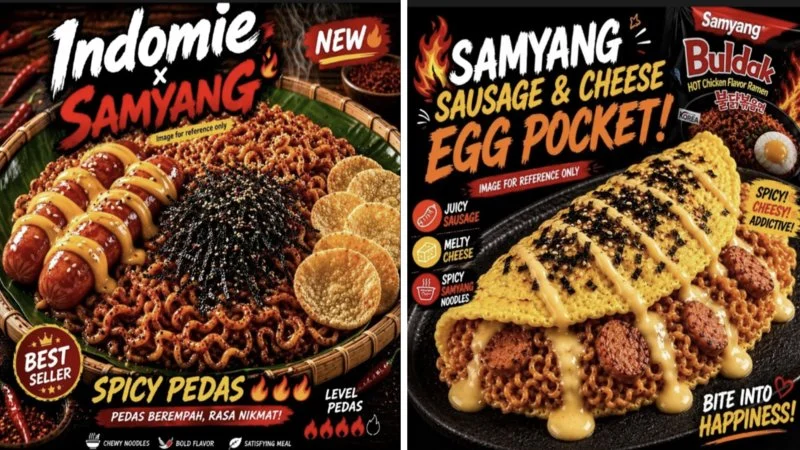
The rapid integration of generative artificial intelligence into the marketing departments of the global hospitality industry has sparked a significant cultural and ethical debate, reaching a fever pitch in mid-2026 as consumers increasingly push back against "AI slop" in food advertising. What began as a cost-saving experiment for small business owners has transformed into a focal point of online discourse, with critics arguing that AI-generated food imagery is not only aesthetically unappealing but fundamentally deceptive. As these synthetic images proliferate across delivery apps, physical menus, and storefront signage, the "AI Food Images Debate" has become a landmark case study in the tension between technological convenience and consumer trust.
The Evolution of Food Advertising and the Advent of Generative AI
Historically, food photography has been one of the most specialized and expensive niches within the advertising industry. Professional food stylists often spend hours using non-edible materials—such as motor oil for syrup or glue for milk—to ensure menu items look enticing under studio lights. However, the barrier to entry for high-quality visuals dropped precipitously in early 2023 with the public release of advanced text-to-image models like Midjourney, DALL-E 3, and Stable Diffusion.
For small to mid-sized restaurants, the appeal was immediate. A professional photoshoot can cost thousands of dollars, requiring the coordination of photographers, stylists, and fresh ingredients. In contrast, an AI prompt can generate dozens of "high-definition" images of burgers, tacos, or pasta for the price of a monthly software subscription. By mid-2024, the presence of these images began to shift from experimental social media posts to foundational marketing assets, appearing on major delivery platforms such as UberEats, Grubhub, and DoorDash.
Chronology of the Debate: From Curiosity to Contempt
The timeline of the AI food image controversy reflects a growing sophistication in how consumers identify and reject synthetic media.
2023: The Early Warning Signs
The earliest recorded instances of the debate occurred in January 2023. On January 21st, 2023, the X (formerly Twitter) account @SentimentalCook advocated for AI images as a "game changer" for food business owners who could now bypass professional photoshoots. The post was met with immediate, though then-niche, pushback. User EnuliPepyeh argued that professional photography is essential because it represents the "true representation of what you serve," marking the first major instance of the "authenticity versus efficiency" argument that would define the next three years.
By August 2023, the culinary publication Eater weighed in with an analysis titled "Why AI Food Photography Is So Unappetizing." The article highlighted the "uncanny valley" effect—a phenomenon where an image looks almost real but is slightly "off" in a way that triggers a disgust response in the human brain.
2025: The Mainstream Backlash
As AI tools became more ubiquitous, the backlash moved to platforms like Reddit. In January 2025, a post on the subreddit /r/mildlyinfuriating titled "Restaurants shouldn’t be allowed to use AI images" garnered over 26,000 upvotes. The user, DublinItUp, shared screenshots of a snack bar menu featuring a "Fantasy Burger." The image displayed a level of structural perfection and glossy sheen that was physically impossible to replicate in a real kitchen, leading to accusations of bait-and-switch marketing.
A similar incident occurred in April 2025, when another viral Reddit post criticized a restaurant’s use of AI for steak and mushroom sandwiches. The images featured impossible textures—stretchy mozzarella that looked like molten plastic and caramelized onions with fractal-like patterns. These posts signaled a shift in consumer sentiment: AI was no longer seen as a clever tool, but as a hallmark of "lazy" or "untrustworthy" business practices.
July 2026: The Viral Tipping Point
The discourse reached a definitive peak in July 2026. On July 11th, X user Kit Ellis (@kitosan) posted a critique of "Patty’s Diner," a business that had replaced its menu photos with AI-generated visuals. The images featured "Queso Popper Smash" burgers and "Golden State Queso Tots" with a hyper-saturated, glowing quality. Ellis’s post, which argued that AI images were "not the flex you think it is," amassed over 13.1 million views and 74,000 likes in less than a week.
This post triggered a flood of similar sightings. Users began sharing "AI fails" in the wild, including window posters where the food appeared to be melting or where human hands holding the food had six or seven fingers—a common artifact of early-to-mid-generation AI.
The "Uncanny Valley" and the Junji Ito Comparison
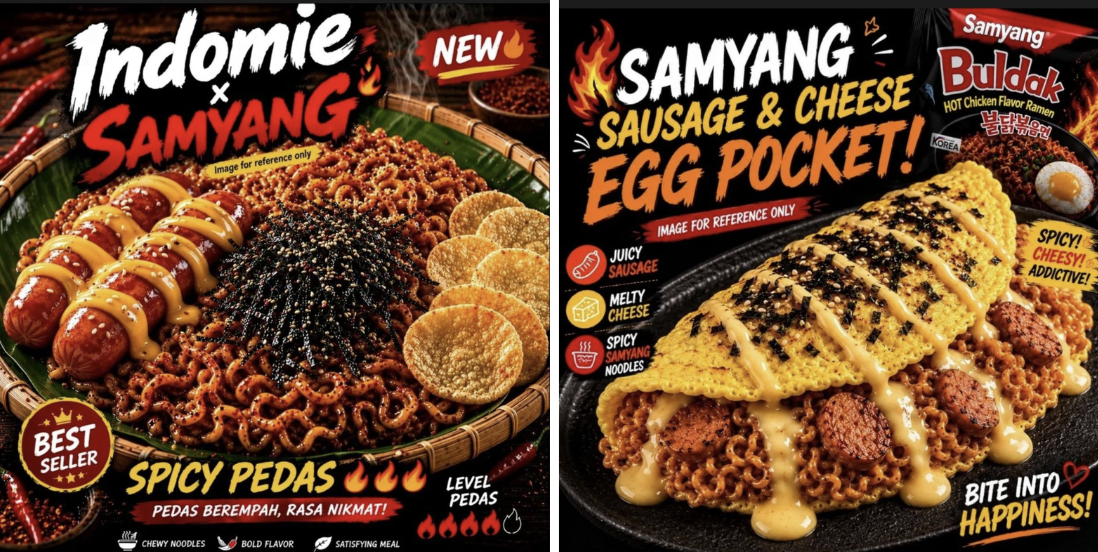
One of the most notable aspects of the July 2026 debate was the comparison of AI food to horror aesthetics. On July 15th, 2026, prominent YouTuber Justin Whang and other users noted that certain AI-generated dishes—particularly noodles and shredded meats—bore a striking resemblance to the work of Japanese horror manga artist Junji Ito.
The "Junji Ito effect" in AI food refers to the way the algorithms often over-detail textures, creating repetitive, organic patterns that mimic trypophobia-inducing shapes or parasitic structures. In one viral example, a bowl of Indomie noodles was rendered with such high-contrast, swirling detail that users described it as "nightmarish" and "maggot-like." This highlights a fundamental flaw in AI marketing: while the AI aims for "perfection," it often misses the subtle, messy cues that the human brain associates with "deliciousness," such as natural steam, irregular browning, and soft lighting.
The Psychological Impact on Consumer Appetite
Marketing experts and psychologists have pointed out that food photography relies on "appetite appeal." When a consumer looks at a photo of a meal, their brain performs a rapid assessment of its safety, freshness, and caloric value. AI-generated images often fail this test because they lack "organicity."
The hyper-glossy surfaces and impossible lighting found in AI food images suggest a non-biological origin. Critics like Alexander Avila (@aretheygay) argued that even a "blurry, low-quality" photo taken on an old smartphone is more appetizing than an AI image because the former conveys a sense of reality. The blurriness confirms that the object existed in physical space, whereas the AI image communicates a "deep insecurity" on the part of the restaurant, suggesting they are ashamed of how their actual food looks.
Economic Drivers and the Small Business Dilemma
The move toward AI is largely driven by the economic pressures facing small restaurants in a post-pandemic landscape. With rising food costs, labor shortages, and high commission fees from delivery apps, marketing budgets are often the first to be cut.
For a struggling diner, the choice between paying a photographer $1,000 or using a free AI generator seems like a logical financial decision. However, industry analysts suggest this is a "false economy." The negative brand equity generated by "unappetizing" AI images may result in fewer orders, ultimately costing the business more than the original photography would have. Furthermore, as AI detection becomes a common skill among Gen Z and Millennial consumers, businesses using these tools risk being labeled as "cheap" or "inauthentic," labels that are difficult to shed in the competitive hospitality market.
Legal Implications and the Future of Food Labeling
The AI food debate has also caught the attention of consumer protection advocates. In many jurisdictions, "truth in advertising" laws require that a photograph of a product be a reasonable representation of what the consumer will receive.
While many restaurants include small disclaimers such as "Image for reference only," legal experts question whether this is sufficient when the image is entirely synthetic. If an AI-generated burger shows premium ingredients or portions that the restaurant does not actually provide, it could be classified as deceptive trade practice.
As of mid-2026, there are growing calls for regulatory bodies, such as the Federal Trade Commission (FTC) in the United States or the European Consumer Centre, to mandate clear labeling for AI-generated marketing materials. Some delivery platforms have reportedly begun testing "Verified Real Photo" badges to help restore consumer confidence and distinguish between restaurants that invest in real photography and those that rely on algorithmic generation.
Conclusion: The Path Toward Digital Transparency
The "AI Restaurant Food Images" controversy serves as a microcosm of the broader societal struggle with artificial intelligence. While the technology offers unprecedented efficiency, it often lacks the "human touch" that is central to the experience of dining and hospitality. The viral backlash of 2026 suggests that consumers value authenticity over digital perfection, particularly when it comes to the food they consume.
As the industry moves forward, the most successful businesses will likely be those that use AI as a behind-the-scenes tool for logistics or menu planning, while maintaining a commitment to "real-world" transparency in their customer-facing visuals. The debate has made one thing clear: in the world of food, a "perfect" image is no substitute for a real one.

