
The Problem of Tool Proliferation and the Toggle Tax
For the past decade, the software industry has operated under a philosophy of "unbundling," where specific tasks were separated into niche, high-performance applications. While this led to an explosion of innovation, it also created a fragmented ecosystem. Recent workplace productivity studies indicate that the average knowledge worker toggles between different applications and windows nearly 1,200 times a day. This phenomenon, often referred to as the "toggle tax," can cost businesses up to 40% of an employee’s productive time due to the "re-entry cost" of refocusing on a task after switching views.
In this context, the introduction of standalone AI tools—while powerful—often exacerbates the problem. Requiring a user to leave their primary workspace (such as a spreadsheet or a document editor) to prompt a chatbot in a different tab creates a friction point that diminishes the utility of the AI. The emerging consensus among design leaders, including Vitaly Friedman and other proponents of modern UX patterns, is that the value of AI is not found in its novelty, but in its ability to address problems characterized by high severity, high frequency, and high levels of frustration without disrupting the user’s flow state.
Chronology of AI Interaction Models: From Clippy to Ambient Intelligence
To understand the current shift toward "Quiet AI," it is necessary to examine the evolution of assistant-based interfaces over the last three decades.
- The Intrusive Era (Late 1990s): Characterized by Microsoft’s Clippy, these early assistants were proactive but lacked context and sophisticated logic, often interrupting users with irrelevant suggestions.
- The Command Era (2010s): The rise of Siri, Alexa, and Google Assistant introduced voice commands. While useful for simple tasks, they remained siloed from the deep work happening within professional software.
- The Chatbot Explosion (2022–2023): The release of ChatGPT and Claude popularized the "Chat-First" interface. Users had to learn "prompt engineering" and navigate back-and-forth interactions in a separate environment.
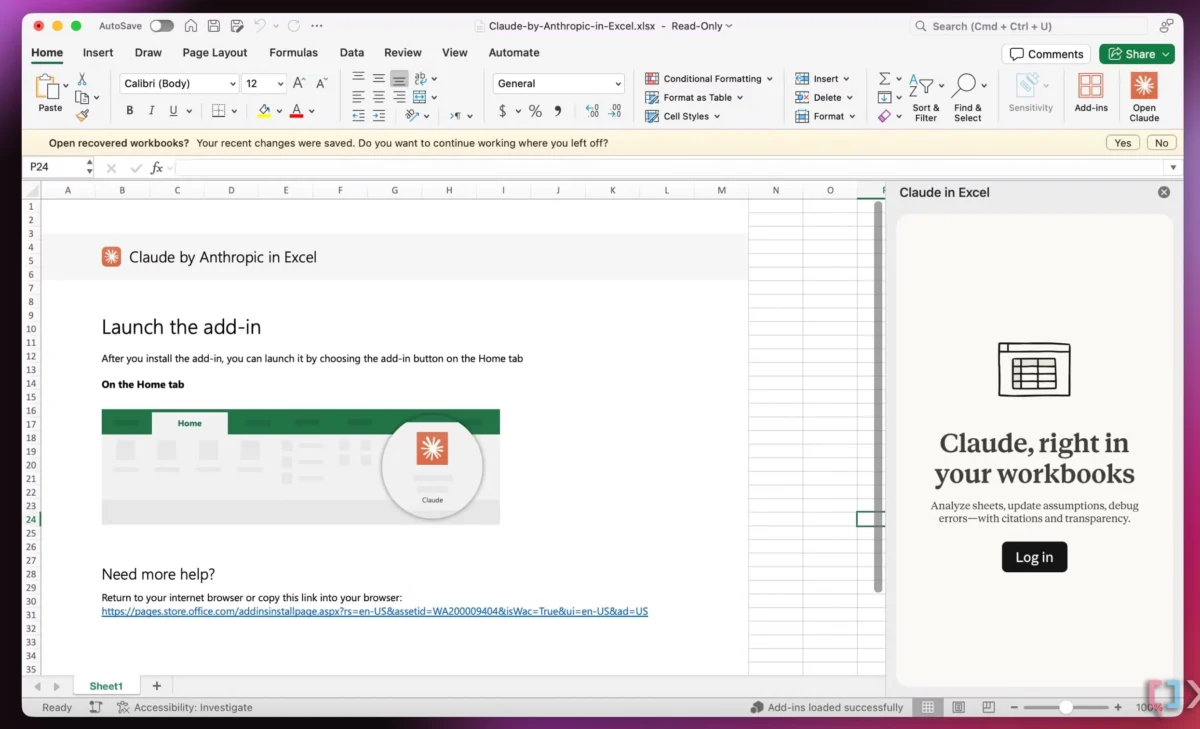
- The Integration Era (2024–Present): The current move toward "Quiet AI," where models like Claude are integrated directly into Microsoft Excel or PowerPoint. Here, the AI observes the context (specific rows or columns) and provides assistance exactly where the data resides.
The Philosophy of Quiet AI and Mental Model Preservation
The concept of "Quiet AI" represents a departure from the "AI-first" marketing narrative. An AI-first approach often prioritizes the capabilities of the model over the needs of the user, forcing users to adapt to the machine’s logic. In contrast, Quiet AI remains invisible until needed, operating in the background to automate repetitive tasks or provide context-aware suggestions.
Psychologically, this aligns with the "Mental Model" theory popularized by design theorist Don Norman. Users have a predefined internal representation of how a system (like a file folder or a spreadsheet) should work based on years of experience. When an AI tool forces a new, unfamiliar workflow—such as navigating terminal commands or complex chat trees—it violates this mental model, leading to resistance and decreased adoption. Seamless integration succeeds because it enhances the existing model rather than replacing it.
Case Study: Folder Instructions for System-Level AI
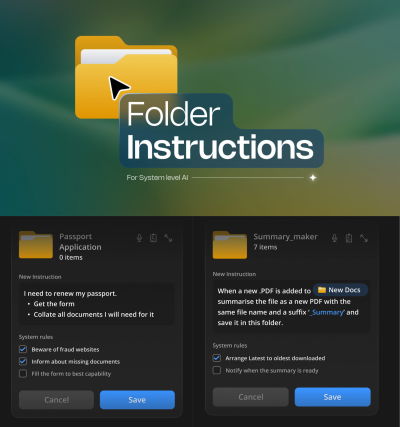
One of the most compelling examples of seamless integration currently being discussed in design circles is the concept of "Folder Instructions," proposed by designer Karthikeya GS. This concept moves AI interaction from the application level to the operating system level, utilizing the most fundamental unit of digital organization: the folder.
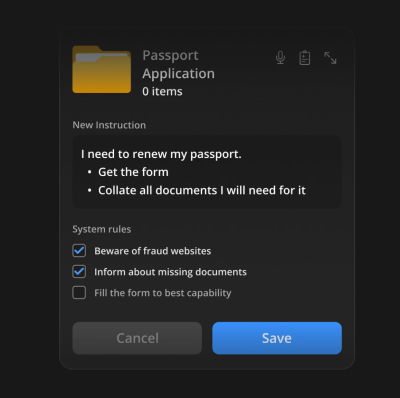
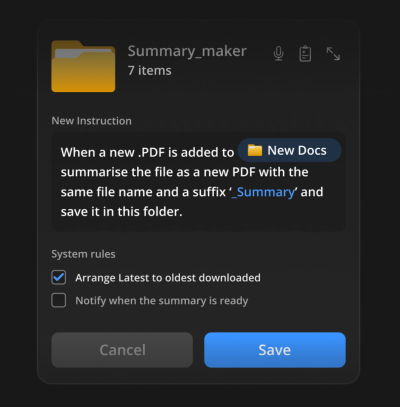
Under this model, a user does not open a new "AI File Manager" app. Instead, they right-click an existing folder on their desktop and provide a set of "intent instructions." For example:
- Passport Application Folder: A user defines that any document dropped into this folder should be checked for expiration dates, categorized by document type, and flagged if a required signature is missing.
- Research Folder: A user instructs the system to automatically generate a three-bullet summary of every PDF added to the folder and move the original file to a "Processed" sub-directory.
This approach is revolutionary because it is "locally scoped." The AI’s permissions are restricted to that specific folder, addressing significant privacy and security concerns. It allows for automation "where the work happens," eliminating the need for users to manually upload files to a cloud-based AI service.
Supporting Data: The Impact of Contextual AI on Productivity
Data from early adopters of integrated AI features suggests a significant delta in performance compared to standalone tools. According to industry benchmarks:
- Task Completion Speed: Users completing data analysis within integrated environments (like Claude in Excel) reported a 30% faster completion rate than those using a side-by-side chat window.
- Error Reduction: Integrated AI, which has direct access to the "ground truth" of the user’s data, reduces "hallucination" errors by 15% because the user can provide immediate feedback and constraints within the visual UI.
- Retention: Users are 50% more likely to continue using an AI feature after 30 days if it is integrated into a tool they already use daily, as opposed to a new subscription-based standalone service.
Industry Reactions and the Competitive Landscape
Major technology incumbents have recognized this shift and are pivoting their strategies accordingly. Microsoft’s "Copilot" initiative is perhaps the most visible example of this, attempting to embed AI into every corner of the Windows ecosystem. Similarly, Apple’s announcement of "Apple Intelligence" focuses heavily on "On-Device Intelligence" and "System-Wide Writing Tools," ensuring that the AI understands the context across different apps without requiring the user to manage the data transfer.
However, the challenge for these giants remains the "seamlessness" of the experience. Many current integrations still feel like "sidebars"—auxiliary windows that take up screen real estate without truly merging with the core UI. The next frontier for designers is "In-Canvas AI," where the interface itself morphs based on the AI’s suggestions, such as a spreadsheet that automatically adds necessary columns or a design tool that adjusts layouts in real-time.
Analysis of Implications: Privacy, Agency, and the Future of Work
The move toward integrated, quiet AI carries profound implications for the future of digital interaction.
First, there is the issue of User Agency. As AI becomes more integrated and "quiet," there is a risk that it may perform actions without explicit user consent. Design patterns must, therefore, include robust "Human-in-the-loop" (HITL) checkpoints. Features like the "Folder Instructions" mentioned earlier are successful because they require the user to set the initial intent, maintaining a balance between automation and control.
Second, the Privacy Paradigm is shifting. Seamless integration often requires the AI to have deeper access to system-level data. This is driving the development of "Edge AI"—models that run locally on a user’s hardware rather than in the cloud. By processing "Folder Instructions" or "Excel Analysis" locally, companies can offer the benefits of AI without the liability of handling sensitive user data on their servers.
Finally, there is the Evolution of Design Education. As highlighted by Vitaly Friedman’s "Design Patterns For AI Interfaces," the role of the UX designer is shifting from "building screens" to "designing behaviors and systems." Designers must now understand how to handle "probabilistic" interfaces—UIs that don’t always behave the same way because they are powered by AI—and how to make those interfaces feel reliable and predictable to the end user.
Conclusion: The End of the "Shiny New Tool" Era
The era of getting excited about a "new tool" simply because it features AI is drawing to a close. The market is maturing, and the winners of the next decade will not be those who build the most powerful standalone models, but those who build the most invisible ones.
Value in the modern digital economy is derived from reducing frustration and eliminating the friction that slows down human creativity. By focusing on seamless integrations that respect established mental models—like system-level folder instructions or contextual in-app assistants—developers and designers can deliver the true promise of the AI revolution: a world where technology works for the user, rather than the user working for the technology. The path forward is not more tools, but better, quieter, and more integrated capabilities that allow users to remain focused on the work that actually matters.

